Ercole Colombo / Studio Colombo/Getty Images
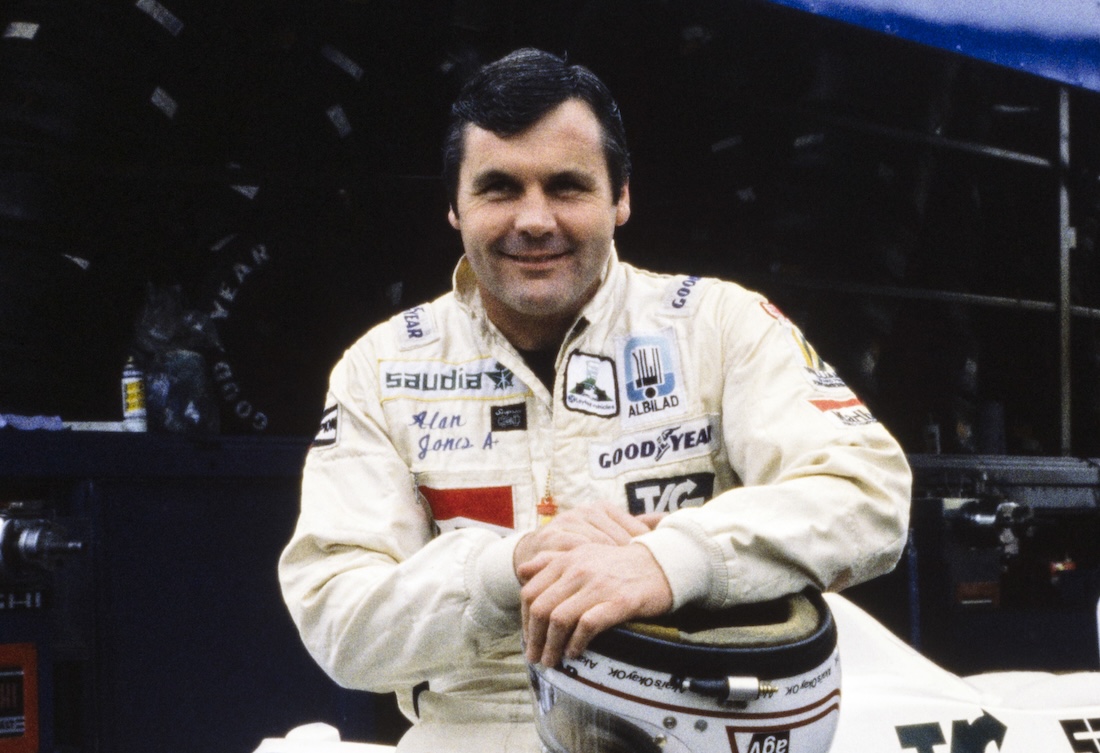
Alan Jones, 1946-2026
1980 Formula 1 world champion Alan Jones has died at the age of 80, following a brief illness. The Australian’s passing was confirmed by his wife, Amanda Butler-Davis, via a statement through Motorsport Australia.
“We are extremely saddened to announce the passing of our beloved Alan, who passed away on 5 November following a short illness,” Butler-Davis said. “He will be dearly missed and fondly remembered by those closest to him, as well as the many fans whose support he was always grateful for.
“Alan dedicated his life to motorsport, building a legacy that will live on through the countless people he touched along the way.
“Through his achievements, passion and unmistakable character, both on and off the track, Alan left an enduring mark on the sport both nationally and across the globe.
“As a family, we would like to take this opportunity to thank everyone who was part of Alan’s journey for the many years of friendship, love and support. He was incredibly fortunate to have so many wonderful people around him.”
Jones is also survived by his six children, Christian, Amber, Zara, Jack, Camilla and Emma.
Born in Melbourne on Nov. 2, 1946 into a racing family – his father Stan was a race driver himself, winning the 1959 Australian Grand Prix in a Maserati 250F – it did not take long for the younger Jones to also catch the racing bug, and he competed in Australia before two attempts to race in Europe eventually led him to Formula 3 in the early 1970s.
Jones mades his Formula 1 debut driving for Hesketh in 1975, and picked up his first points in Germany later that same year for Graham Hill’s eponymous Embassy Hill team.
After a year with Surtees, his first victory came for Shadow in 1977 as Jones proved to be another tenacious driver whose determination had taken him from Australia to compete at the top of grand prix racing.
Joining Williams in 1978, Jones would become synonymous with the team in F1, securing third in the championship the following year – winning four of the final six races – in a sign of things to come. In 1980, Jones would become Williams’ first world champion, with four victories enough to help him secure the title at the penultimate round in Montreal.
He’d add a fifth win that year at the season finale in Watkins Glen, and kick off 1981 with another win at Long Beach, but the U.S. would see his final three successes. After bookending that 1981 season with victory in the Caesars Palace Grand Prix, Jones retired.
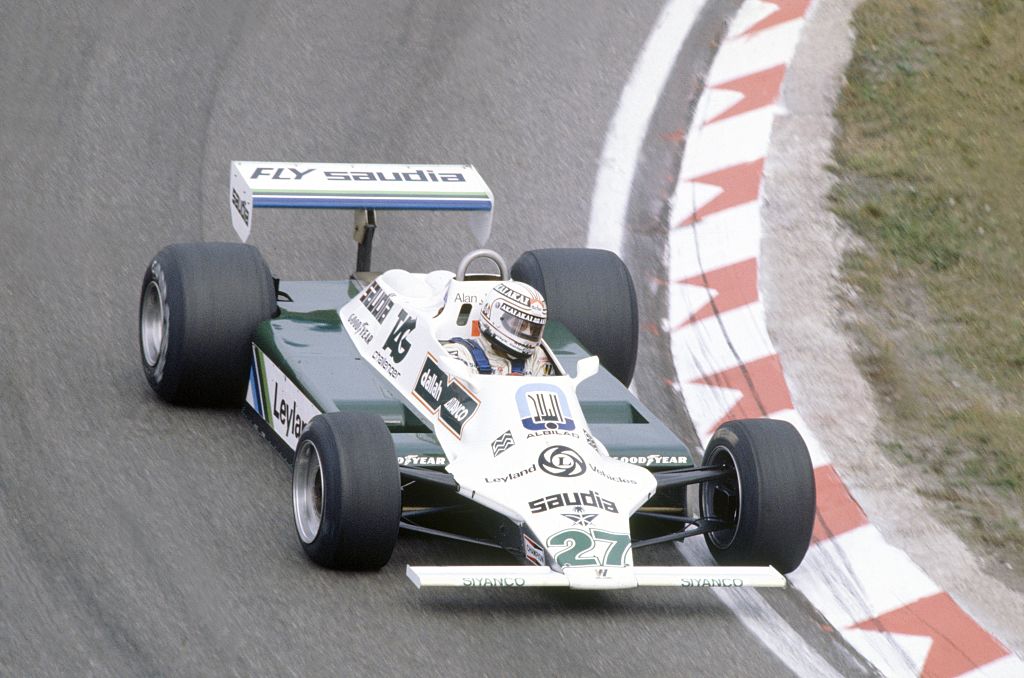
Jones and the Williams FW07 formed one of the most iconic car-driver combos in F1 history. Getty Images
He returned for a one-off appearance with Arrows in 1983, the made a full-time comeback in 1985 with Carl Haas’ F1 team that was late to debut that year – a season that also saw Jones’ lone IndyCar start for Newman/Haas, where he finished third at Road America while filling in for an injured Mario Andretti. Despite a pair of top-six finishes the following season the Haas F1 car was dogged by reliability issues and Jones retired from grand prix racing for a second and final time at the end of 1986.
Jones continued to race competitively, though, notably in the V8 Supercars championship until the late 1990s, and appearing at Bathurst until the early 2000s. Still the last Australian to win the F1 title, Jones would also provide expertise as a driver steward and a television pundit after his racing retirement.
“Alan Jones was one of the most significant figures in Australian motorsport history, whose achievements on the world stage brought immense pride to our nation,” Motorsport Australia President Andrew Fraser said.
“Alan’s place in the history of Australian motorsport is assured, having become the second Australian to win the Formula 1 world championship in 1980. With 12 Grand Prix victories and a career that spanned the highest levels of international and domestic competition, his was a record built on determination and a fierce and fearless competitive resolve.
“Alan was a singular character, formidable on and off the racetrack. His contribution to our sport will be remembered for generations, and we extend our deepest sympathies to his family and loved ones.”
F1 President and CEO Stefano Domenicali also paid tribute to the 1980 world champion, who started 116 grands prix in his career.
“I am deeply saddened by the passing of Alan Jones, a true great of our sport and an extraordinary racer,” Domenicali said. “Alan was a formidable competitor, a natural leader and an icon who inspired generations of fans, particularly in his beloved Australia.
“His place in Formula 1 history is assured, not least for bringing Williams their first drivers’ and constructors’ world championships in 1980, a defining moment for the team and our sport. But beyond his achievements on track, Alan will be remembered for his character, his passion and the lasting mark he left on Formula 1.
“He will be greatly missed by the entire Formula 1 family. On behalf of Formula 1, I send my heartfelt condolences to his family and loved ones. Our thoughts are with them at this very sad time.”
As the team’s first world champion, Williams also issued a statement, with Jones having won the third-highest number of races for the team in its history, alongside Jacques Villeneuve on 11 victories and behind only Nigel Mansell and Damon Hill.
“Everyone at Williams is deeply saddened to learn of Alan Jones’ passing,” a team statement read. “Alan was instrumental in making Williams what it is today, forming an extraordinary bond with Frank Williams and Patrick Head to become our first drivers' world champion in just our fourth season in Formula 1.
“He set the standard for Williams champions: a fast, uncompromising racer with a challenger mentality who loved motor racing and dedicated his life to it. He is a true Australian icon and a Williams legend, and he will be dearly missed. We send our love and thoughts to the Jones family and all his friends.”

Chris Medland
While studying Sports Journalism at the University of Central Lancashire, Chris managed to talk his way into working at the British Grand Prix in 2008 and was retained for three years before joining ESPN F1 as Assistant Editor. After three further years at ESPN, a spell as F1 Editor at Crash Media Group was followed by the major task of launching F1i.com’s English-language website and running it as Editor. Present at every race since the start of 2014, he has continued building his freelance portfolio, working with international titles. As well as writing for RACER, his broadcast work includes television appearances on F1 TV and as a presenter and reporter on North America's live radio coverage on SiriusXM.
Read Chris Medland's articles
Latest News

Comments
Comments are disabled until you accept Social Networking Cookies. Update cookie preferences
If the dialog doesn't appear, ad-blockers are often the cause; try disabling yours or see our Social Features Support.